A game, made real
CritterChaos
From the launch page
to the last shipment.
A team-built card game that reached its Kickstarter funding goal. I connected the first prototype, manufacturer communication and campaign page with the production and delivery work that followed.
Prototype · Manufacturer coordination · Campaign website · Fulfilment
The decisions along the way
Getting a game into people’s hands.
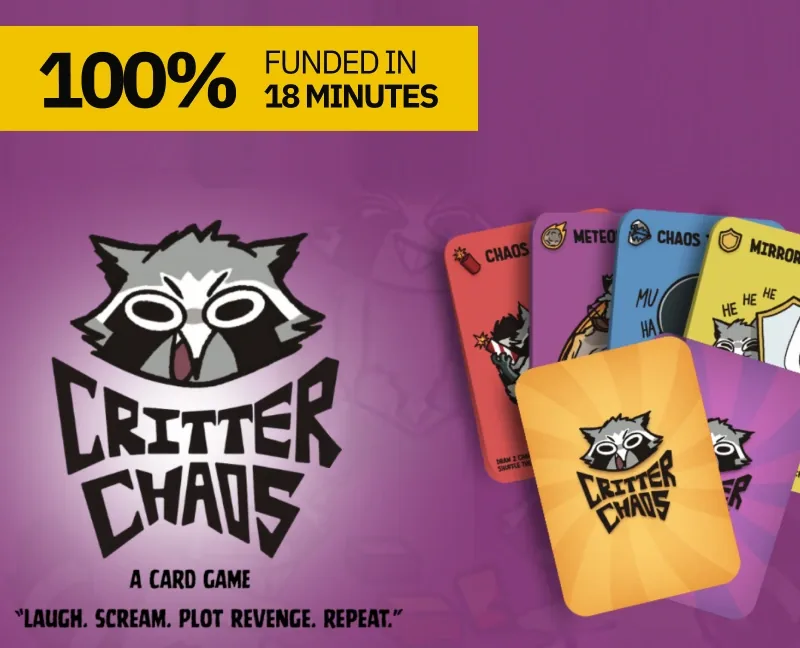
A team idea. A local printer. A physical prototype.Campaign artwork · interactive composition
From an idea to something playable
First, make it real enough to test.
Our team formed in summer 2025. I initially leaned towards a practical gadget, but we chose a game and worked through the concept and rules in Singapore.
After classes, I found a local printer and arranged the first physical prototype. I paid that prototype expense myself.
The game concept and rules were shared work, and a designer helped with the artwork. We played the prototype and adjusted rules together.
We could put a real game in front of people and see how it felt to play.
Comparing the options
Find a supplier I could work with through production.
I contacted manufacturers in China, requested quotes and compared alternatives. We returned to the first company I had found.
I was the main manufacturer contact, handling most communication through WeChat and working through specifications, variants and samples.
The manufacturer produced the game; the team remained involved in product decisions and sample review.
We chose the supplier I judged to offer the best balance of quality and price, then worked through the specifications and sample together.
The details you only notice in your hands
The rules sheet was too big.
The physical sample exposed something the screen didn’t: an oversized, awkward rules sheet. After reviewing it with the team, I needed to give the manufacturer a clear change.
Your call
Skip to my decisionThe rules sheet is too bulky. What would you change?
Explore three possible approaches, then see the change we made.
What we actually changed
We reduced the font and sheet size.
The aim was a more compact package that was easier to carry. The alternative approaches above illustrate the trade-off; this is the change we actually made.
I sent the revision requests to the manufacturer, including changes to the card format and material options.
We reviewed the sample together. Game rules and artwork were shared or specialist contributions.
Helping people understand the game
I learned the visual work while doing it.
The campaign needed a clear way to explain the game and collect interest before launch.
I built the pre-launch landing page, made animations and most campaign graphics and page content with AI assistance, helped film and appeared in the video.
A teammate supplied pricing for me to review. Others made Instagram content and videos to build organic interest.
The campaign raised €5,206 from 160 backers against a €2,000 goal. We had support for the game; now we had to manufacture and deliver it.
Staying with the project
It was not finished when the campaign ended.
After funding, I continued coordinating production and fulfilment. A professor connected us with a shipping company.
I connected the manufacturer and shipper in WeChat, passed on the order spreadsheet, tracked expenses and personally handled the final remaining packages while in Ghana.
A teammate prepared customer information. The manufacturer and shipping company coordinated the main transfer and delivery process.
Most orders followed that fulfilment process. Address problems on the remaining packages needed extra attention, which I helped finish personally.
What stays with me
Settle the details before the money arrives.
Next time I would settle specifications, variants and supplier details earlier. Repeated decisions and school commitments slowed us down. I would also consider testing paid advertising, without assuming it would outperform the organic approach.
The story, in my words.
We formed a team in summer 2025 and developed Critter Chaos in Singapore. The concept and rules were shared work, with a designer helping on the artwork. I found a local printer and arranged our first physical prototype, which we played, showed to people and used to refine the game.
I contacted Chinese manufacturers, compared quotes and became the main contact through WeChat. We chose the first supplier I had found because I thought it offered the best balance of quality and price. After reviewing the sample with the team, I requested changes to the cards, materials and rules sheet to make the physical package closer to what we wanted.
I also built the pre-launch landing page and most campaign graphics and page content, using AI to help with images and text. I made animations, helped film and appeared in the launch video. Teammates contributed pricing, social content and videos. The campaign reached its funding goal.
I stayed involved through production and fulfilment. A professor introduced a shipping company, a teammate prepared order information, and I connected the manufacturer and shipper and passed the spreadsheet along. Most deliveries followed that process. I personally handled the remaining packages while in Ghana when address problems needed extra attention.
What I worked on
- Website & campaign page
- Prototyping
- Manufacturer coordination
- Team coordination
- Shipping
€5,206 pledged against a €2,000 goal, from 160 backers. Figures from the published Kickstarter campaign.